
- Visual Studio Code Run Code With Arguments
- Visual Studio Code Run Code
- Visual Studio Code Run Code In Terminal Shortcut
- Visual Studio Code Run Code Button
- Visual Studio Code Run Code 2017
Use shortcut Ctrl + Alt + N. Or press F1 and then select/type Run Code, or right click the Text Editor and then click Run Code in the editor context menu. Or click the Run Code button in the editor title menu. Or click Run Code button in the context menu of file explorer. To stop the running code. Running multiple code cells can be accomplished in a number of ways. You can use the double arrow in the toolbar of the Notebook Editor to run all cells within the Notebook or the run icons with directional arrows to run all cells above or below the current code cell.
A visual studio code is a lightweight software application with a powerful source code editor that runs on the desktop. It is a free source code editor developed by Microsoft for Windows, Mac OS and Linux. It is a software editor that has a rich extension of various languages like C++, C+, C, Java, Python, PHP, Go, etc. and runtime language extensions such as .NET and Unity. It is easy to edit, build, syntax highlighting, snippets, code refactoring and debugging. In visual studio code, we can change the application's background theme, keyboard shortcuts set on our preferences, install an extension and add additional functionality.
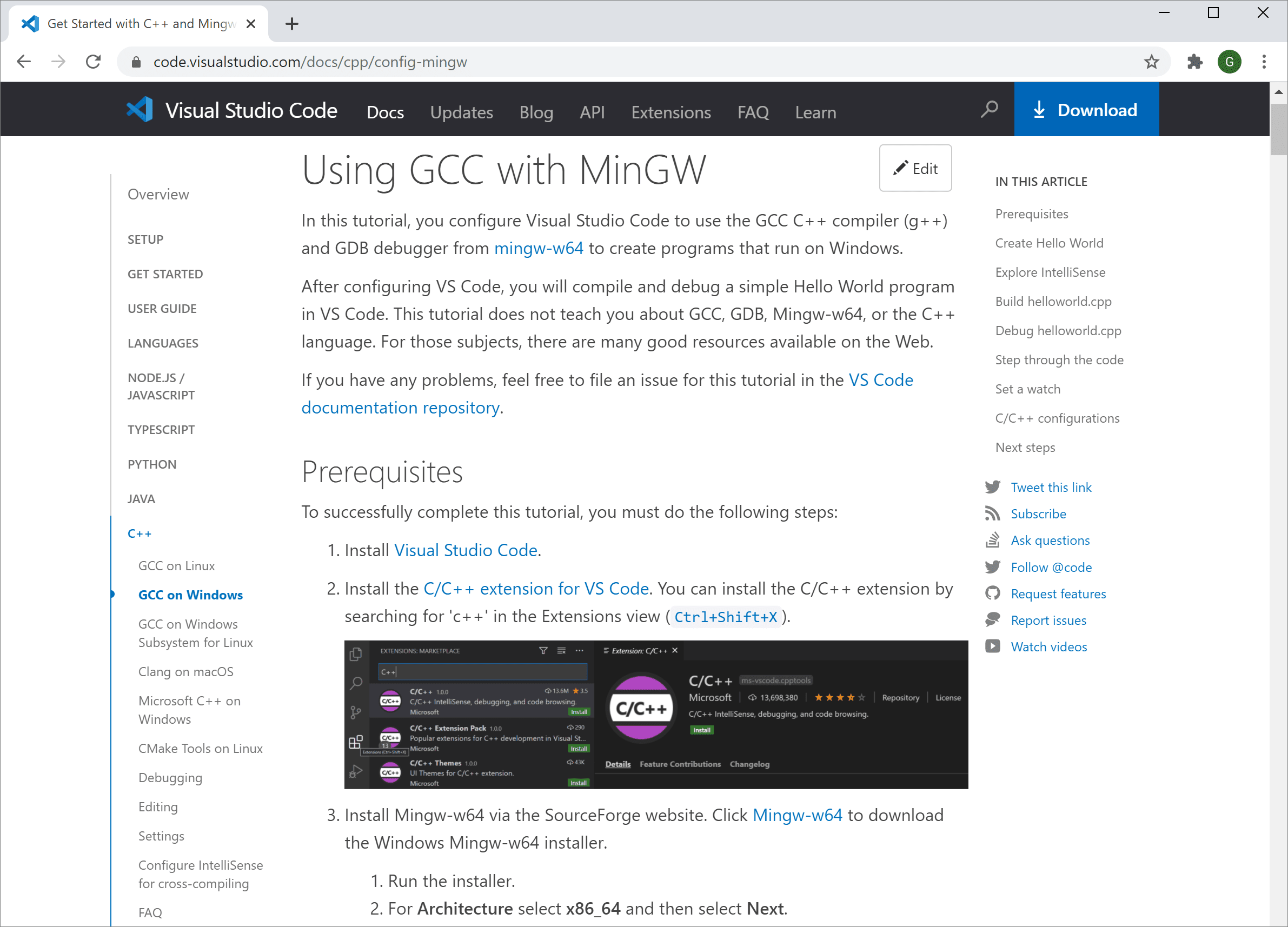
Prerequisites for running a C program in Visual Studio Code
- We should have a basic knowledge of C programming.
- The Visual Studio Code Editor must be installed in the system.
- Download the C/C++ Extension. It is an extension provided by Microsoft that support visual studio code. It helps in IntelliSence, debugging and code browsing of the programming code in the visual studio.
- Download the C/C++ compilers. There are some popular compilers are:
- GCC on Linux
- GCC via Mingw-w64 on Windows
- Microsoft C++ compiler on windows
- Clang for XCode on MacOS
We have already installed the Visual Studio Code in our system. The user interface of VS code look like the following:
Download & Install the C/C++ Extension
1. We need to click on the extension button that displays a sidebar for downloading and installing the C/C++ extension in the visual studio code. In the sidebar, type C Extension.
2. After that, click on the C/C++
In this image, click on the Install button to install the C/C++ extension.
3. After clicking the Install button, it shows the below image.
In this image, we can see it shows the Uninstall button that means the C/C++ extension has been successfully downloaded in the visual studio code.
In this image, we can see it shows the Uninstall button that means the C/C++ extension has been successfully downloaded in the visual studio code.
Download and Install Compiler Extension
A MinGW is an advanced GCC compiler software used to compile and execute code. It is software that supports only the window operating system.
Download the MinGW-w64 Compiler
1. Go to the https://sourceforge.net/projects/mingw We land on the following page.
2. After that, click on the Download button, then it starts the downloading of the MinGW GCC compiler, as we can see in the below image.
3. MinGW software has been successfully downloaded into the system.
4. Now we double-click on the MinGW set up to install the compiler.
As we can see, it shows that it is a harmful file click on the Run button to proceed with installing the setup.
5. Click on the Install
6. Set it defaults, or we can change the storage location of the setup. After that, click on the Continue
7. After clicking the continue button, it shows step 2 of MinGW Installation Manager.
8. As we click on the Continue, it shows the below image. In the MinGW Installation Manager, we need to check the Mingw32-base package and Ming32-gcc-g++ package to run and compile the C/ C++ program in the visual studio code editor.
9. After selecting the checkbox, click on the Installation tab (at the top left corner of the dialog box).
Here we click on Apply Changes to set the package's installation in MinGW, as given below.
10. After click on the Apply button, it shows the below image.
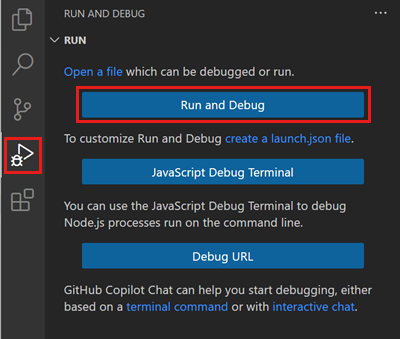
11. After downloading the packages, it shows the installation process of the package, as shown below.
Here we can see all the changes have been successfully applied and then click on the Close button.
Set the Environment Path for the MinGW Set Up
After downloading and installing the MinGW compiler, we now set the environment path to include the C/C++ compiler directory.
1. Go to the installation directory of the MinGW Set Up. Here we installed the setup at the C drive, as shown below.
2. Double click on the MinGW folder. It shows the below image.
3. After that, click on the bin folder and then copy the directory path, as shown below.
Here is the path of the MinGW folder path: C:MinGWbin
4. After copying the directory path, go to This PC -> Right Click on This PC -> Select/ Click on the Properties. It shows the below image.
5. After that, click on the Advanced system settings to display a popup box of System Properties, as shown below.
6. Click on the Environment Variables to set the directory path, as shown below.
First, we have to click on the System Variables Path and then click on the Edit button, as shown in the above image.
7. As we click on the Edit button, it shows a popup window to set a new path, as shown below.
In the above image, first, we click on the New button and then paste the C:MinGWbin path; after that, click the OK button.
8. Similarly, click the OK button to the Environment Variables and System Properties.
9. If we want to check that the MinGW has been successfully installed in the system: go to the Command Prompt or cmd, write the gcc -version, and press the Enter
Start Coding in the Visual Studio Code Editor
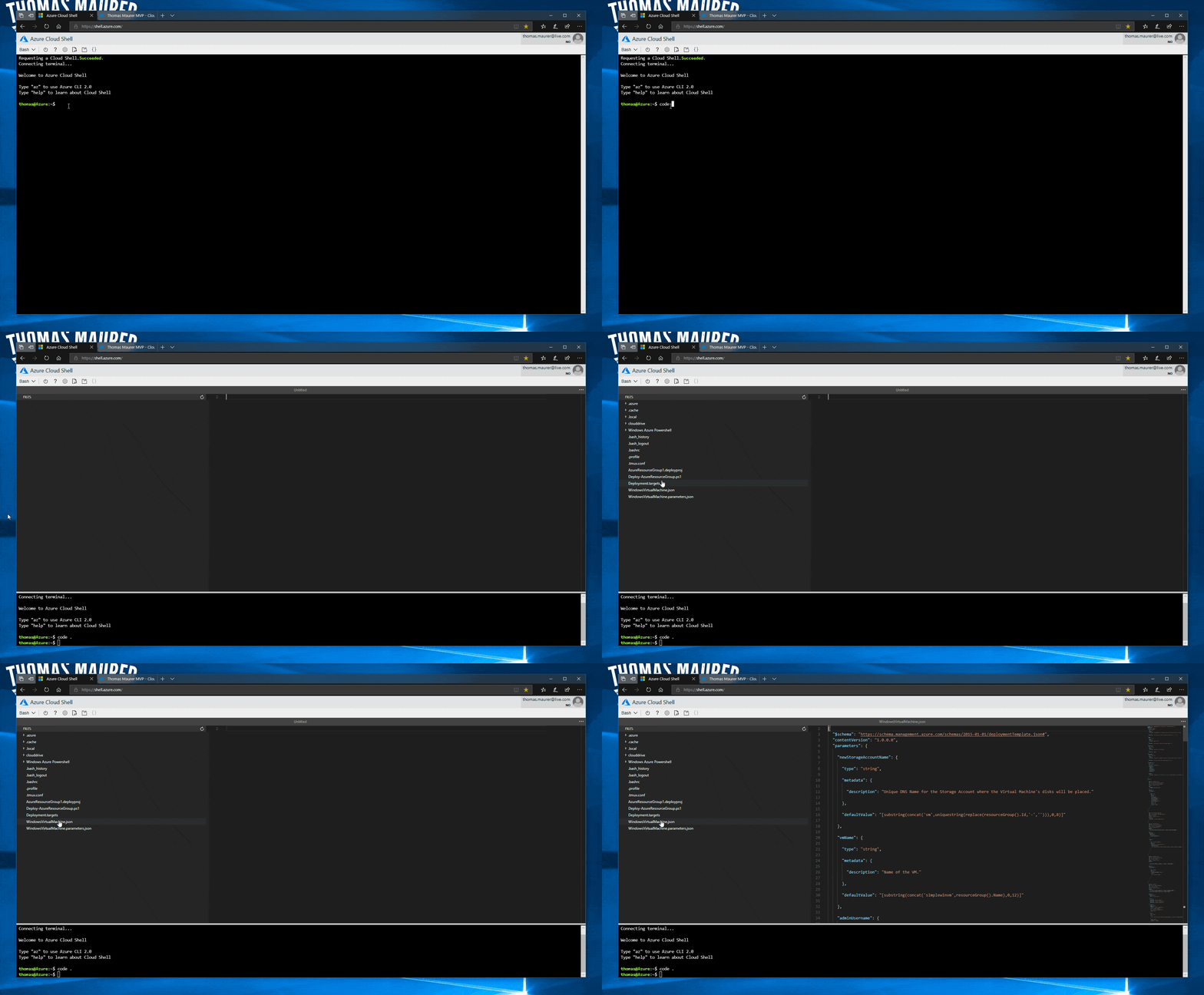
1. Here we created a C Program folder to store all program code. We can create a folder with any name in any directory.
2. Go to the VS Code and click on the Add Folder.

3. As we click on the Add Folder, it shows a popup dialog box to select the folder to store the program.
4. After selecting the folder, click on the Add The selected folder appears in the explorer section, as we have shown below.
5. Move the mouse over the C PROGRAM folder; it shows a + Click on the button and write the file name as JavaTpoint.c, as shown below.
Now write and understand simple C programming in the VS Code editor.
JavaTpoint.c
After writing the code, right-click on the program, as shown below.
Visual Studio Code Run Code With Arguments
Click on the Run Code option or press Ctrl + Alt + N from the button. It shows the following output.
Let's write a program to calculate the area and perimeter of the rectangle in the VS Code editor.
Rectangle.c
We can click on the Run button or press the Ctrl + Alt + N from the keyboard. It displays the below output.
Let's write another C program to take an input from the user in the Visual Studio Code Editor.
Rectangle2.c
When we click on the Run button or press the Ctrl + Alt + N, it displays the below output.
In the above program, we take length and breadth as input from the keyboard. As the program is compiled, it produces the below statement.
Here Output tab is read-only, and hence we cannot take any input from the user. So, we need to add some steps in the code editor to take user inputs from the console/user.
Following are the steps to take input from the user.
- First of all, we need to stop the background running the c program by pressing the Alt + Ctrl + M from the keyboard.
- After stopping the C file, go & click the File button at the top left corner of the Visual Studio Code Editor, and select the Settings via Preferences, as shown below image.
- After clicking the Settings, it shows the image below.
In this image, select the extension button to set the settings for the C Compiler. - Click on the Extension button and scroll the drop-down box to select the Run Code Configuration.
- Now scroll the right-side pane and Tick on the Run In Terminal.
- Go to the c and again execute the program by clicking on the Run, it produces the following results, as shown below.
Ever since VS Code was released I’ve been a big fan! It’s a great way for windows junkies like myself to have a terminal like programming scripting environment. With integration into Git, along with thousands of extensions to help me keep my code organized and formatted I began using it as my main editor for a lot of things, even PowerShell scripts.
Currently, I’m on somewhat of a personal mission to learn and explore new languages, solely for the purpose of illustrating how language independent RESTful APIs are. c# is next on my list, and while it’s not a new language for me, utilizing it within Visual Studio Code is. During this “mission” I realized that there are quite a few things you need to do in order to run c# within Visual Studio Code. Initially, I was going to place these within the “How to Consume APIs with c#” blog, but realized that this probably works better standing on its own! So, let’s take a look at how to prep VS Code to run c#!
Sophos 0x80004005 vs. First up, some leg work.
First up, obviously install Visual Studio Code – also, if you haven’t already, download and install the .Net Core SDK. Finally, once those two are installed we can move on to getting the c# extension installed within VS Code. Note: there are a lot of extensions available to us within VS Code, so be sure we grab the right one. To do so, select ‘Extensions’ and search for ‘c#’. In the list, select the extension that contains ‘Omnisharp’ and click ‘Install’ (See below).
Initialize the Project
Alright, time to start actually building out the shell for our project – To do this we simply need to open a folder and run a few commands. From the explorer tab, click ‘Open Folder’ and point to an empty folder you would like to create your project in.
Once the folder loads we need to initialize our .net skeleton within it. To do so we will use dotnet command from the terminal. If you don’t see a terminal at the bottom of VS Code, go ahead and select ‘View->Terminal’ to display it and run the following command
This will create a couple of files within our folder structure – the project definition file (.csproj) as well as the main file (.cs) to house our code. By default, we will see the standard “Hello World” example. Also, if prompted to download any other assets, go ahead and select ‘Yes’.
If you have reached this point then a big congrats is in order – you have successfully setup your VS Code instance to run c# code!
Building and Running
To build our test project let’s go ahead and run ‘dotnet build‘ within our terminal.
And likewise, to run the project code, simply execute ‘dotnet run‘ within the terminal.
Where’s my NuGet?!?!
Simply printing Hello World to the console is great and all but we all know that anything we write is much, much more complex. NuGet is functionality that those using the full-blown version of Visual Studio have come to love and depend on. NuGet is a nifty little package manager that allows us to maintain what packages and assembly references we have attached to our projects, maintaining and limiting versions and conflicts! So, it’s kind of a must that we have it within VS Code, otherwise, I’ll simply just go back to the original Visual Studio for my c# projects. Thankfully, we have a way of getting it – the nifty Visual Studio Code extensions!
Select the Extensions tab, search for Nu-Get and install NuGet Package Manager – Easy Peasy!
Now that we have NuGet installed let’s have a quick look at how we can manage our packages – the easiest way that I have found is to simply hit the ‘F1’ key to bring up the VS Command pallet – a nifty little way to run single commands within our project. From there, simply start typing the work ‘nuget’, you should see the prompts displaying available options – the one we want, is the ‘Add Package’ command.
For this example let’s add the System.Data.SQLClient package to our project. In the first prompt, you can simply input ‘System.Data’ and hit enter – this will bring up a list of all the system.data packages. From the list displayed, select your desired package, in our case SQLClient, select the desired version and away we go.
Visual Studio Code Run Code
In the event that any dependencies are invalid, nuget and VS Code gives you the option to automatically resolve them. If you happen to see a message about unresolved dependencies go ahead and click ‘Restore’
And there you go – nuget successfully setup and installing packages for you! At this point, you can go ahead and through your ‘using System.Data.SqlClient’ command at the beginning of your cs files and start utilizing some of the SQL Client functionality!
Visual Studio Code Run Code In Terminal Shortcut
As you can see there is a little bit of legwork in getting Visual Studio Code prepped and ready to run our c# code – but thankfully this is a one-time thing. Once you have it set up and configured you can use VS Code for all of your c# needs! Honestly, I gathered this information from a lot of different MS pages and blogs and hopefully getting this all on one article will help get you on the right track to getting your VS Code setup! Thanks for reading!
Visual Studio Code Run Code Button
You might also enjoy these recent posts..
Visual Studio Code Run Code 2017
- Friday Shorts – Visual Studio 2010 and BIDS, AJAX Toolkit Combo Boxes and the Great One No support for BIDS development in Visual Studio 2010 Ahh Man! I ended up rebuilding one of my work machines..
- Quick to the point – VMware Tools Installation throwing vix error code 21012 – yeah, now what?!? Ah, the subtleties of upgrading a vSphere environment – tackle the vCenter, tackle the hosts, and then take care of the..
- Dumping SharePoint Integrated SSRS reports to pdf using c# Anytime I’m working on any sort of coding project Google is really my savior – there is absolutely no way..
- VMware View on the $99 HP Touchpad Last month, being the quintessential geek that I am, I spent the greater part of one of my weekends installing..
- Installing offline bundles in ESXi 5 So I ran into a situation where I needed to get the HP CIM providers onto ESXi 5 in order..