
Barcode Basics lets you quickly generate barcodes with a user-friendly interface. Barcode Basics can create a range of common barcodes in many file types including EPS, JPEG, and PNG. Barcode types supported are:
Barcode Basics 24 March 2020 Why We Should Focus on Our Partnerships During Times Like These Label Printers, 100 Words or Less, Barcode Basics 12 March 2020. Barcode Types (EAN, CODE 39, ITF, CODABAR, CODE 128) About 100 types of barcodes are available in the world. The following is an introduction to 5 types of typical barcodes. The one guide you need to learn all about barcodes! This guide provides an easy-to-understand explanation of the structures and standards of 1D codes such as EAN, CODE39,.
- Code 39
- Code 128
- EAN 8
- EAN 13
- EAN 13 (GS1)
- EAN 14
- GS1 Databar Omnidirectional
- GS1 Databar Stacked
- GS1 Databar Stacked Omnidirectional
- GS1 Databar Truncated
- GS1 Databar Limited
- UPC A
- UPC E
- Interleaved 2 of 5
- ITF 14
- ISBN
- ISSN
- ISMN
- Italian Pharmacode
- MSI Plessey
- Pharmacode
- PZN7
- PZN8
- SSCC-18
- Two-track Pharmacode
Features
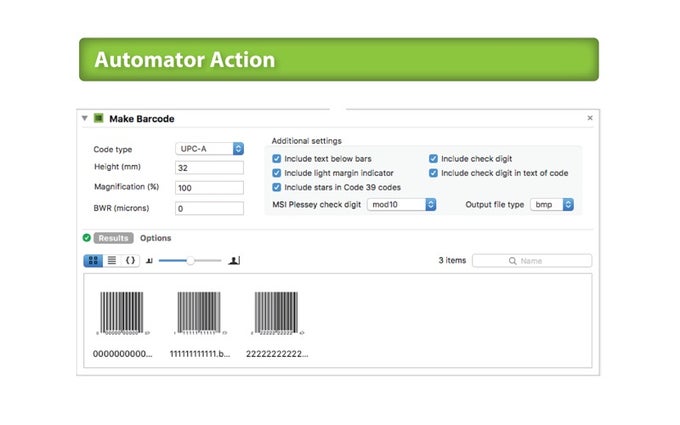
- Bar Width Reduction (BWR) to allow you to compensate for ink spread on printing presses. This is an essential feature for professional printing (and cannot be supported by other font based applications).
- Bar height (truncation) and barcode scale (magnification).
- Optional add-on digits (either 2 or 5) are supported for EAN, UPC, ISMN, ISBN and ISSN codes.
- Fast response from English speaking support via the 'Contact support…' option in the app's main menu.
- Support for metric (mm or microns) and imperial measurements (inches)
- Barcodes can be exported in EPS (vector) format or high resolution GIF, BMP, JPG, or PNG
- Barcodes are compatible with Illustrator, InDesign, Photoshop, Word, Powerpoint etc.

Barcode Basics Pdf

Barcode Basics App
Barcoding is an identification process used by many industries to identify, track, and manage products. They are commonly used on such varied items as shipping labels, foodstuffs, library books, pharmaceuticals, and construction materials. Barcodes are also used in manufacturing, production, and distribution. A barcode is a set of machine-readable printed bars of variable thickness. On its own, it means nothing, but it becomes meaningful when linked to a unique set of data that people can understand. The information that it encodes depends on the organization using it and its purpose, which is why different deciphering systems exist today. (The script in Barcode Basics is called “Generate Code”) Set Field “MyBarcodeField”, “Constant::gOutput” The first step gives your source data to Barcode Basics by placing it in the field called gInput. The second step tells Barcode Basics to run its script called “Generate Code” to make the barcode. The third step takes the.