
Brilliant Street Musicians Play Vivaldi's Four Seasons, Amsterdam. The Four Seasons The Four Seasons (Italian: Le quattro stagioni) is a set of four violin concertos by Antonio Vivaldi. Composed in 1725, The Four Seasons is Vivaldi’s best-known work, and is among the most popular pieces in the classical music repertoire. The texture of each concerto is varied, each resembling its respective season.
Conductor and Violinist Rachell Ellen Wong leads the Seattle Symphony for the complete performance for Antonio Vivaldi’s The Four Seasons, on Thursday, October 22, 2020 at 7:30pm on Seattle Symphony Live.
ANTONIO VIVALDI
Le quattro stagioni (“The Four Seasons”), Op. 8, Nos. 1-4
La primavera (“Spring”), RV 269 Allegro—Largo—Allegro: Danza pastorale
L'estate (“Summer”), RV 315 Allegro non molto—Adagio—Presto
L'autunno (“Autumn”), RV 293 Allegro—Adagio molto—Allegro
L'inverno (“Winter”), RV 297 Allegro non molto—Largo—Allegro
BORN: March 4, 1678 in Venice, Italy
DIED: July 28, 1741 in Vienna, Austria
WORK COMPOSED: 1716–1725
Italian composer Antonio Vivaldi (1678–1741) famously said, “There are no words, there is only music there.” And yet, ironically, Vivaldi’s best-known work, Le Quattro stagioni (“The Four Seasons”), Op. 8, Nos. 1–4, is based upon a series of sonnets. These concerti can arguably be considered among the first truly programmatic pieces; that is, music that tells or follows a narrative. Although Vivaldi composed a wide range of genres, his concerti endure as one of his greatest contributions to the Western classical canon.
Vivaldi lived and worked in Baroque Venice. He was an ordained Catholic priest as well as a composer. For nearly thirty years he taught music and composed for an orphanage in the town, named Ospedale della Pietà. Vivaldi crafted an immense œuvre of concerti during this period, exploring the potential of conversations between soloist and orchestra. Although he did not compose The Four Seasons for the orphanage, the works were undoubtedly influenced by his compositions from that period.
Vivaldi composed The Four Seasons between 1716 and 1725. A typical Vivaldi concerto includes three movements, but there is only one sonnet to accompany each of the seasons. As a result, the sonnet breaks into three sections to follow the individual movements. As you listen to these concerti, let your imagination wander and fill with images. The first movement ofLa primavera (“Spring”), RV 269, arguably the most famous of Vivaldi’s works, reads: “Springtime is upon us. The birds celebrate her return with festive song, and murmuring streams are softly caressed by the breezes. Thunderstorms, those heralds of Spring, roar, casting their dark mantle over heaven. Then they die away to silence, and the birds take up their charming songs once more.” Many cues in this sonnet appear in the music, such as the celebrating bird in the solo violin and the murmuring streams in the string accompaniment. The second movement continues: “On the flower-strewn meadow, with leafy branches rustling overhead, the goat-herd sleeps, his faithful dog beside him.” In this Largo, pay attention to the branches rustling overhead in the ensemble and the slow breathing of the faithful dog. The final movement brings the frivolity and joy of spring: “Led by the festive sound of rustic bagpipes, nymphs and shepherds lightly dance beneath the brilliant canopy of spring.”
Following the whimsical wonders of spring is the intense heat and fierce thunderstorms found in L’estate (“Summer”), RV 315. The first movement begins with a slow introduction that reflects the opening lines of the sonnet: “Beneath the blazing sun’s relentless heat, men and flocks are sweltering, pines are scorched.” When the solo violin enters, however, the piece suddenly becomes fast and furious. During this movement, listen for the violin imitating the sounds of birds and Vivaldi’s subtle transition to the promise of a storm: “We hear the cuckoo’s voice; then sweet songs of the turtle dove and finch are heard. Soft breezes stir the air, but threatening north winds sweeps them suddenly aside. The shepherd trembles, fearful of violent storms and what may lie ahead.” The brief second movement features a slow meditation, highlighting the shepherd’s anxiety: “His limbs are now awakened from their repose by fear of lightning's flash and thunder's roar, as gnats and flies buzz furiously around.” Following this moment of reflection, the dramatic third movement brings the storm: “Alas, his worst fears were justified, as the heavens roar and great hailstones beat down upon the proudly standing corn.” Listen for the solo violin mimicking the rain pouring down while the accompanying orchestra plays bursts of thunder and lightning.
The subsequent concerto, L’autunno (“Autumn”), RV 293, celebrates the harvest with rousing dances and hunts. Listen for a lively dance in the first movement depicting the end of the harvest and the solo violin mimicking an overflowing cup of wine: “The peasant celebrates with song and dance for the harvest safely gathered in. The cup of Bacchus flows freely and many find their relief in deep slumber.” In contrast, the second movement brings peace and sleep: “The singing and the dancing die away as cooling breezes fan the pleasant air, inviting all to sleep without a care.” Vivaldi paints this serene picture with a slow tempo and harmonious chords. All instruments move together — including the solo violin — to transport listeners into a tranquil state. The third movement, however, features an exhilarating hunt: “The hunters emerge at dawn, ready for the chase, with horns and dogs and cries. Their quarry flees while they give chase. Terrified and wounded, the prey struggles on, but, harried, dies.” Listen for the strings imitating hunting horns, guns and dogs while the solo violin leads the chase.
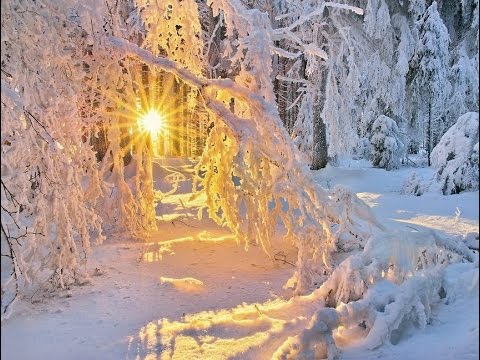
Vivaldi’s The Four Seasons concludes with biting winds and idyllic images by the fire in L’inverno (“Winter”), RV 297. Imagine the brisk chill of winter upon you in the joyful first movement: “Shivering, frozen mid the frosty snow in biting, stinging winds; running to and fro to stamp one’s icy feet, teeth chattering in the bitter chill.” The runs in the solo violin perfectly encapsulate the brisk chill found in the air. In contrast, the second movement transfers indoors: “To rest contentedly beside the hearth, while those outside are drenched by pouring rain.” The solo violin presents a lyrical, reflective melody as the strings play simple accompaniment underneath. Vivaldi layers images in this movement, adding plucking strings in the background as a subtle nod to the rain outside. The final movement of tonight’s program is a fast and frenzied depiction of winter’s dangers: “We tread the icy path slowly and cautiously, for fear of tripping and falling. Then turn abruptly, slip, crash on the ground and, rising, hasten on across the ice lest it cracks up. We feel the chill north winds course through the home despite the locked and bolted doors. This is winter, which nonetheless brings its own delights.” The solo violin begins with runs before the strings join in for an ominous illustration of cracking ice and bracing winds. The concerto concludes with the solo violin scampering indoors in attempts to escape the winter frigidity.
Scored for solo violin; harpsichord; theorbo; strings
© 2020 Megan Francisco
Posted on October 15, 2020

At-A-Glance
About this Piece
By 1725, when Vivaldi published his Opus 8, a set of 12 concertos entitled The Contest between Harmony and Invention, he may well have been the most famous musician in Europe, and the first four concertos of the set, named Spring, Summer, Fall, and Winter, were already well known from circulating manuscript copies. Mac app bar.
Part of their appeal would doubtless have been their extra-musical content. Vivaldi was hardly the first composer to depict nature and human activities in instrumental music, but no one had conjured the physical world quite so vividly and concisely with violins before. He wrote a sonnet for each concerto explaining what was going on, intended not only as description, but as instruction for performance: the sonnet verses are printed not only as prefaces to each concerto, but also in all the instrumental parts, in the midst of tempo markings and performance directions.

In Spring’s first movement, we hear the arrival of Spring, the birds greeting it (first solo), brooks and breezes, and a quick thunderstorm. In the slow movement, a goatherd sleeps under a tree while the second violins represent “the murmuring branches and leaves” and the viola’s repeated notes represent his “faithful dog” (whining or barking, depending on how violists understand the word “grida” written in their part). The finale is a big dance accompanied by bagpipes, which are represented by droning basses.
In Summer, the opening bars present the “merciless summer sun” and “man and flock” sweltering under it. In the first solo, the violin is an ornamented cuckoo — it’s the soloist’s task to make the cuckoo’s notes distinct in a barrage of 16th-notes. The second solo depicts the turtledove and goldfinch, and rustling of the gentle Zephyr breeze, which is joined by the violent north wind. The wind subsides long enough to let us hear how it makes a shepherd fear a coming storm, his agitated state depicted in a sequence of chromatically descending diminished chords — dissonances that lead to other dissonances instead of resolving. Vivaldi was capable of great harmonic (and contrapuntal) sophistication when it suited his purpose, and there are passages in the Four Seasons that could easily be mistaken for something written a century after his death. The second movement depicts the gentle, buzzing insects, and the shepherd listening with apprehension to distant thunder. In the third movement we get thunder, lightning, and hail.
Autumn begins with a celebration of the harvest in a vigorous dance that loses its energy as the peasants get drunk and fall asleep. In the slow movement the sonnet speaks of revelers enjoying “sweet sleep” in the “mild and pleasant” air, but the music is mysterious and dreamlike: virtually the entire movement is another sequence of unresolved dissonances. The physical world, and the aristocracy, barge in with the horn calls of a hunt in the third movement. We hear the prey flee from gunshots and barking hounds, and finally tire and die.
Winter depicts shivering (yet another remarkable chain of dissonances), chattering teeth, and “running and stamping your feet every moment” to keep warm in snow and biting wind. Venice, at about the same latitude as Portland or Minneapolis, can get serious winter weather. The slow movement is a cozy indoor scene by the fire “while the rain drenches everyone outside,” the raindrops in pizzicato under the solo violin’s melody. The finale begins by painting a picture of trying to walk on ice without slipping, not always successfully, and concludes with the onslaught of “Sirocco, Boreas and the other winds at war.”
Play Vivaldi Four Seasons On Youtube
For those with enough skill, the four concertos are great fun to play, which would have ensured popularity in the 18th century, when instrumental proficiency was common among people with money. Of course, not everyone liked them. Geminiani, the Corellian conservative, complained that “Imitating the Cock, Cuckoo, Owl and other birds, and also sudden Shifts of the Hand from one extremity of the Finger-board to the other,” were “Tricks that rather belong to the Professors of Legerdemain and Posture-makers than to the art of Musick.” Geminiani inveighing against Vivaldi sounds not unlike the 19th-century classicists inveighing against Wagner and Liszt, and just as ineffectively.
By 1725, when Vivaldi published his Opus 8, a set of 12 concertos entitled The Contest between Harmony and Invention, he may well have been the most famous musician in Europe, and the first four concertos of the set, named Spring, Summer, Fall, and Winter, were already well known from circulating manuscript copies.
Part of their appeal would doubtless have been their extra-musical content. Vivaldi was hardly the first composer to depict nature and human activities in instrumental music, but no one had conjured the physical world quite so vividly and concisely with violins before. He wrote a sonnet for each concerto explaining what was going on, intended not only as description, but as instruction for performance: the sonnet verses are printed not only as prefaces to each concerto, but also in all the instrumental parts, in the midst of tempo markings and performance directions.
In Spring’s first movement, we hear the arrival of Spring, the birds greeting it (first solo), brooks and breezes, and a quick thunderstorm. In the slow movement, a goatherd sleeps under a tree while the second violins represent “the murmuring branches and leaves” and the viola’s repeated notes represent his “faithful dog” (whining or barking, depending on how violists understand the word “grida” written in their part). The finale is a big dance accompanied by bagpipes, which are represented by droning basses.
In Summer, the opening bars present the “merciless summer sun” and “man and flock” sweltering under it. In the first solo, the violin is an ornamented cuckoo — it’s the soloist’s task to make the cuckoo’s notes distinct in a barrage of 16th-notes. The second solo depicts the turtledove and goldfinch, and rustling of the gentle Zephyr breeze, which is joined by the violent north wind. The wind subsides long enough to let us hear how it makes a shepherd fear a coming storm, his agitated state depicted in a sequence of chromatically descending diminished chords — dissonances that lead to other dissonances instead of resolving. Vivaldi was capable of great harmonic (and contrapuntal) sophistication when it suited his purpose, and there are passages in the Four Seasons that could easily be mistaken for something written a century after his death. The second movement depicts the gentle, buzzing insects, and the shepherd listening with apprehension to distant thunder. In the third movement we get thunder, lightning, and hail.
Autumn begins with a celebration of the harvest in a vigorous dance that loses its energy as the peasants get drunk and fall asleep. In the slow movement the sonnet speaks of revelers enjoying “sweet sleep” in the “mild and pleasant” air, but the music is mysterious and dreamlike: virtually the entire movement is another sequence of unresolved dissonances. The physical world, and the aristocracy, barge in with the horn calls of a hunt in the third movement. We hear the prey flee from gunshots and barking hounds, and finally tire and die.
Winter depicts shivering (yet another remarkable chain of dissonances), chattering teeth, and “running and stamping your feet every moment” to keep warm in snow and biting wind. Venice, at about the same latitude as Portland or Minneapolis, can get serious winter weather. The slow movement is a cozy indoor scene by the fire “while the rain drenches everyone outside,” the raindrops in pizzicato under the solo violin’s melody. The finale begins by painting a picture of trying to walk on ice without slipping, not always successfully, and concludes with the onslaught of “Sirocco, Boreas and the other winds at war.”
Play Vivaldi Four Seasons Spring
For those with enough skill, the four concertos are great fun to play, which would have ensured popularity in the 18th century, when instrumental proficiency was common among people with money. Of course, not everyone liked them. Geminiani, the Corellian conservative, complained that “Imitating the Cock, Cuckoo, Owl and other birds, and also sudden Shifts of the Hand from one extremity of the Finger-board to the other,” were “Tricks that rather belong to the Professors of Legerdemain and Posture-makers than to the art of Musick.” Geminiani inveighing against Vivaldi sounds not unlike the 19th-century classicists inveighing against Wagner and Liszt, and just as ineffectively.