
- There is no Remote Desktop in Windows 10 Home. Since it was for home usage, Microsoft removed some features from Windows 10 home like group policy editor gpedit.msc and remote desktop RDP.
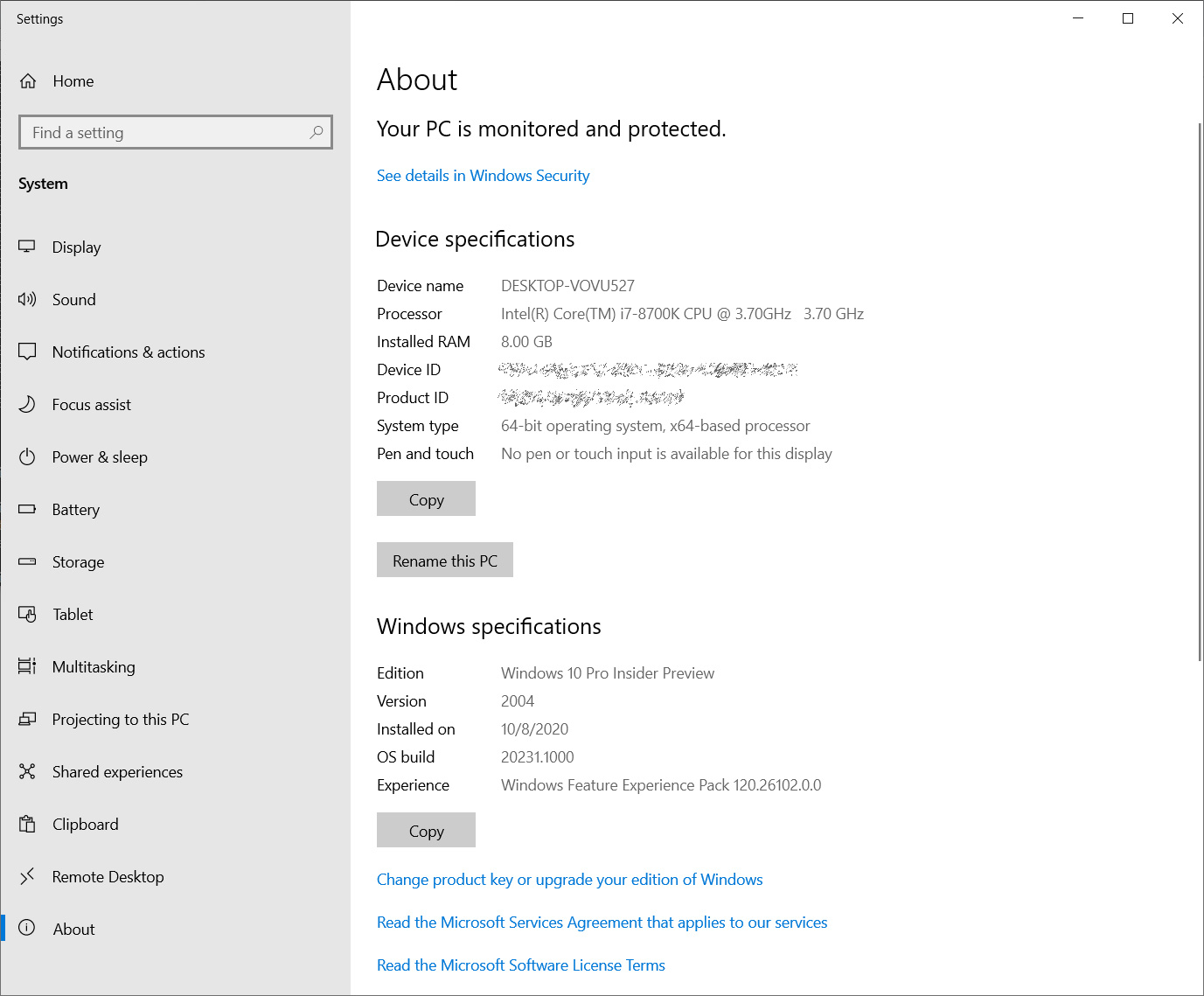
- He was on Windows 2004, but I just did updates to bring it to 20H2 with no further updates. When I do actually get in, it's much slower than I would expect on a 1Gbit LAN and high end hardware. It does work sometimes, so it isn't a firewall or blocked ports. Both of us are on Windows 10 Pro 20H2.
- By default, multiple concurrent remote desktop sessions are not allowed on any of Windows desktop systems, including Windows 10. Here is what you will get when you are trying to log in 2 or more accounts simultaneously on a Windows 10 computer. Another user is signed in. If you continue, they will be disconnected.
Termsrv.dll x64 version 19041.662, Windows 10 x64 version 20H2 10.0.19042.685 I made the change to termsrv.dll for multi-user, then the 'Remote Desktop Services' could not be started. I put the original termsrv.dll back again, the service can start.
-->See a list of known issues that have been resolved for Windows 10, version 20H2 and Windows Server, version 20H2 over the last six months. Looking for a specific issue? Press CTRL + F (or Command + F if you are using a Mac) and enter your search term(s) to search the page.
Resolved issues
| Summary | Originating update | Status | Date resolved |
|---|---|---|---|
| Microsoft Edge missing after using custom media/ISOs including March 29, 2021 updates Microsoft Edge missing when installing Windows from custom media/ISOs using updates released March 25, 2021 or later. | OS Build 19042.906 KB5000842 2021-03-29 | Resolved | 2021-03-29 17:01 PT |
| Unexpected results when printing from some apps or to some printers Issues might include missing or solid color graphics, misalignment/formatting issues, or printing of blank pages/labels. | OS Build 19042.867 KB5000802 2021-03-09 | Resolved KB5001649 | 2021-03-18 19:00 PT |
| Error when attempting to print to certain printers You might receive an APC_INDEX_MISMATCH error with a blue screen when attempting to print. | OS Build 19042.867 KB5000802 2021-03-09 | Resolved KB5001567 | 2021-03-15 14:00 PT |
| Memory or disk space error when opening documents in Microsoft Office apps You might receive an error when attempting to open files that trigger the Protected View feature. | OS Build 19042.844 KB4601382 2021-02-24 | Resolved | 2021-03-13 11:42 PT |
| Some games might fail to open, or you might receive an error You might have issues with some Direct3D games when using in-game overlay feature of Discord. | OS Build 19042.1000 KB4598291 2021-02-02 | Resolved External | 2021-02-08 19:16 PT |
| You might receive an error when accessing the sign-in options or users MMC snap-in You might receive the error, 'Your PC will automatically restart in one minute' | N/A | Resolved | 2021-01-08 13:57 PT |
| Stop error when plugging in a Thunderbolt NVMe SSD Devices using Thunderbolt SSDs may receive a stop error 'DRIVER_VERIFIER_DMA_VIOLATION (e6)' when plugging an SSD in. | N/A | Resolved KB4586853 | 2020-11-30 14:00 PT |
| Certificates may not be present after updating to a newer version of Windows 10 Devices in a managed environment using update management tools or ISO images might lose certificates when updating. | N/A | Resolved | 2020-12-11 18:27 PT |
| Issues when using Microsoft IME for Japanese or Chinese languages Users of the Microsoft IME for Japanese or Chinese languages might have issues. | N/A | Resolved KB4586853 | 2020-12-03 14:18 PT |
| Domain controllers in your enterprise might encounter Kerberos authentication issues Authentication and renewal issues for Kerberos ticket after installing updates released November 10, 2020. | OS Build 19042.630 KB4586781 2020-11-10 | Resolved KB4594440 | 2020-11-19 10:00 PT |
Issue details
March 2021
Microsoft Edge missing after using custom media/ISOs including March 29, 2021 updates | ||
| Status | Originating update | History |
| Resolved | OS Build 19042.906 KB5000842 2021-03-29 | Resolved: 2021-03-29, 17:01 PT Opened: 2021-03-29, 16:15 PT |
Devices with Windows installations created from custom offline media or custom ISO image might have Microsoft Edge Legacy removed by this update, but not automatically replaced by the new Microsoft Edge. This issue is only encountered when custom offline media or ISO images are created by slipstreaming this update into the image without having first installed the standalone Servicing Stack Update (SSU) released March 29, 2021 or later. Note Devices that connect directly to Windows Update to receive updates are not affected. This includes devices using Windows Update for Business. Any device connecting to Windows Update should always receive the latest versions of the Servicing Stack Update (SSU) and latest cumulative update (LCU) without any extra steps. Workaround: If you have already encountered this issue by installing the OS using affected custom media, you can mitigate it by directly installing the new Microsoft Edge from here. If you need to broadly deploy the new Microsoft Edge for business, see Download and deploy Microsoft Edge for business Affected platforms:
Resolution: This issue is resolved. To avoid this issue, be sure to first slipstream the Servicing Stack Update (SSU) released March 29, 2021 or later into the custom offline media or ISO image before slipstreaming the latest cumulative update (LCU). To do this with the combined SSU and LCU packages now used for Windows 10, version 20H2 and Windows 10, version 2004, you will need to extract the SSU from the combined package. Use the following steps to extract the using SSU:
| ||
Unexpected results when printing from some apps or to some printers | ||
| Status | Originating update | History |
| Resolved KB5001649 | OS Build 19042.867 KB5000802 2021-03-09 | Resolved: 2021-03-18, 19:00 PT Opened: 2021-03-18, 17:25 PT |
After installing updates released March 9, 2021 or March 15, 2021, you might get unexpected results when printing from some apps. Issues might include:
Affected platforms:
Resolution: This issue was resolved in the out-of-band update KB5001649. It is a cumulative update, so you do not need to apply any previous update before installing it. You will need to Check for updates to install KB5001649 and might need to also select Download and Install. For instructions on how to Check for updates, please see Update Windows 10. You can import this update into Windows Server Update Services (WSUS) manually. See the Microsoft Update Catalog for instructions. Note KB5001649 is cumulative and addresses both the issue above and the issue addressed in the March 15, 2021 out-of-band release for the APC_INDEX_MISMATCH error with a blue screen. | ||
Error when attempting to print to certain printers | ||
| Status | Originating update | History |
| Resolved KB5001567 | OS Build 19042.867 KB5000802 2021-03-09 | Resolved: 2021-03-15, 14:00 PT Opened: 2021-03-10, 18:04 PT |
After installing KB5000802, you might receive an APC_INDEX_MISMATCH error with a blue screen when attempting to print to certain printers in some apps. This issue affects a subset of Type 3 printer drivers and does not affect printer drivers that are Type 4. If you are unsure which type your printer driver is, use the following steps:
Workaround: To mitigate the issue, follow the instructions in this video. The Command Prompt commands from the video are as follows (you will need to replace KX driver for Universal printing with the name of your printer, as explained in the video):
Affected platforms:
Resolution: This issue was resolved in the out-of-band update KB5001567. It is a cumulative update, so you do not need to apply any previous update before installing it. You will need to Check for updates to install KB5001567 and might need to also select Download and Install. For instructions on how to Check for updates, please see Update Windows 10. You can import this update into Windows Server Update Services (WSUS) manually. See the Microsoft Update Catalog for instructions. | ||
Memory or disk space error when opening documents in Microsoft Office apps | ||
| Status | Originating update | History |
| Resolved | OS Build 19042.844 KB4601382 2021-02-24 | Resolved: 2021-03-13, 11:42 PT Opened: 2021-03-13, 10:50 PT |
When opening a document in Microsoft Word, Microsoft Excel, or any Microsoft Office applications, you might receive the error, 'Microsoft Excel cannot open or save any more documents because there is not enough available memory or disk space'. This issue only affects devices that have installed Microsoft Office apps from the Microsoft Store and are attempting to open a document that has triggered the use of the Protected View feature. Affected platforms:
Resolution: This issue is resolved using Known Issue Rollback (KIR). Please note that it might take up to 24 hours for the resolution to propagate automatically to non-managed devices. Restarting your device might help the resolution apply to your device faster. For enterprise-managed devices that have installed an affected update and encountered this issue, it can be resolved by installing and configuring a special Group Policy. Note Devices need to be restarted after configuring the special Group Policy. To find out more about using Group Policies, see Group Policy Overview. | ||
February 2021
Some games might fail to open, or you might receive an error | ||
| Status | Originating update | History |
| Resolved External | OS Build 19042.1000 KB4598291 2021-02-02 | Last updated: 2021-02-08, 19:16 PT Opened: 2021-02-08, 18:29 PT |
Microsoft and Discord have found incompatibility issues with some games using Direct3D 12 when the in-game overlay feature of Discord is enabled. When attempting to open affected games you might receive an error, or the game might close silently. Affected platforms:
Workaround: To mitigate this issue, you can turn off the in-game overlay in settings within the Discord app. Resolution: This issue is now resolved in an update to the Discord app. To verify you're on the latest version, right click on the Discord icon in the notification area and select 'Check for updates...'. If there are updates to install, it should install automatically but you might need to select the arrow icon in the upper right corner of the app to install the updated version. There is no update for Windows needed to resolve this issue. | ||

November 2020
You might receive an error when accessing the sign-in options or users MMC snap-in | ||
| Status | Originating update | History |
| Resolved | N/A | Resolved: 2021-01-08, 13:57 PT Opened: 2020-11-05, 19:01 PT |
After updating to Windows 10, version 20H2, you might receive the error in LSASS.exe with the text 'Your PC will automatically restart in one minute' when interacting with any dialog window that lists users, for example accessing the sign-in options settings app page or the users folder in the Local user and groups MMC snap-in. This issue only affects devices in which any of the local built-in accounts have been renamed, such as Administrator or Guest. You might also receive an error in the Application Event log with Event ID 1015 that LSASS.EXE failed with status code C0000374. C0000374 is related to heap corruption. This issue is caused by duplicate built-in user accounts being created with the same security identifiers (SIDs) and relative identifiers (RIDs) during the update to Windows 10, version 20H2. SIDs and RIDs for built-in user accounts are well-known as documented here and must be unique on a given device. To safeguard your update experience, we have applied a compatibility hold on these devices from installing or being offered Windows 10, version 2004 or Windows 10, version 20H2. If your organization is using Update Compliance, the safeguard ID is 30103339. Note As of January 7, 2021, you should only receive the safeguard hold dialog or safeguard ID if you are using outdated feature update bundles or media. Workaround: For information on how to mitigate this issue, please see KB4592802. Note If you have already encountered this issue on your device, the uninstall window might be 10 or 30 days depending on the configuration of your environment and the version you’re updating to. Affected platforms:
Resolution: As of January 7, 2020, this issue is now resolved and the safeguard hold has been removed when devices are using the latest feature update bundles and refreshed media. Please note, if there are no other safeguards that affect your device, it can take up to 48 hours before you will be able to the update to Windows 10, version 2004 or Windows 10, version 20H2. Feature update bundles released December 3, 2020 or later will resolve this issue when deploying via Windows Server Update Services (WSUS) and Microsoft Endpoint Configuration Manager. Refreshed media was released December 3, 2020 on Visual Studio Subscriptions (VSS, formerly MSDN Subscriptions) and December 7, 2020 on Volume Licensing Service Center (VLSC). For information on verifying you're using the refreshed media, see How to address feature update refreshes in your environment. If you are using or creating custom media, you will need to include an update released November 17, 2020 or later. Note Devices using Windows Update for Business or that connect directly to Windows Update should receive the latest Windows Setup from Windows Update without any extra steps. | ||

Stop error when plugging in a Thunderbolt NVMe SSD | ||
| Status | Originating update | History |
| Resolved KB4586853 | N/A | Resolved: 2020-11-30, 14:00 PT Opened: 2020-11-05, 19:01 PT |
An incompatibility issue has been found with Windows 10, version 2004 or Windows 10, version 20H2 when using an Thunderbolt NVMe Solid State Disk (SSD). On affected devices, when plugging in a Thunderbolt NVMe SSD you might receive a stop error with a blue screen and 'DRIVER_VERIFIER_DMA_VIOLATION (e6) An illegal DMA operation was attempted by a driver being verified.' Affected Windows 10 devices will have at least one Thunderbolt port and any currently available version of the driver file stornvme.sys. To safeguard your update experience, we have applied a compatibility hold on Windows 10 devices with affected drivers from being offered Windows 10, version 2004 or Windows 10, version 20H2. If your organization is using Update Compliance, the safeguard IDs is 29991611. Affected platforms:
Resolution: This issue was resolved in KB4586853 and the safeguard hold has been removed as of December 11, 2020. Please note, if there are no other safeguards that affect your device, it can take up to 48 hours before the update to Windows 10, version 20H2 or Windows 10, version 2004 is offered. | ||
Domain controllers in your enterprise might encounter Kerberos authentication issues | ||
| Status | Originating update | History |
| Resolved KB4594440 | OS Build 19042.630 KB4586781 2020-11-10 | Resolved: 2020-11-19, 10:00 PT Opened: 2020-11-14, 13:39 PT |
After installing KB4586781 on domain controllers (DCs) and read-only domain controllers (RODCs) in your environment, you might encounter Kerberos authentication issues. This is caused by an issue in how CVE-2020-17049 was addressed in these updates. As noted in CVE-2020-17049, there are three registry setting values for PerformTicketSignature to control it, but in the current implementation you might encounter different issues with each setting:
Note This issue only affects Windows Servers, Windows 10 devices and applications in enterprise environments. Affected platforms:
Resolution: This issue was resolved in the out-of-band update KB4594440. It is a cumulative update, so you do not need to apply any previous update before installing it. To get the standalone package for KB4594440, search for it in the Microsoft Update Catalog. You can import this update into Windows Server Update Services (WSUS) manually. See the Microsoft Update Catalog for instructions. Note KB4594440 is not available from Windows Update and will not install automatically. | ||
October 2020
Certificates may not be present after updating to a newer version of Windows 10 | ||
| Status | Originating update | History |
| Resolved | N/A | Resolved: 2020-12-11, 18:27 PT Opened: 2020-10-30, 17:16 PT |
System and user certificates might be lost when updating a device from Windows 10, version 1809 or later to a later version of Windows 10. Devices will only be impacted if they have already installed any Latest cumulative update (LCU) released September 16, 2020 or later and then proceed to update to a later version of Windows 10 from media or an installation source which does not have an LCU released October 13, 2020 or later integrated. This primarily happens when managed devices are updated using outdated bundles or media through an update management tool such as Windows Server Update Services (WSUS) or Microsoft Endpoint Configuration Manager. This might also happen when using outdated physical media or ISO images that do not have the latest updates integrated. Note Devices using Windows Update for Business or that connect directly to Windows Update are not impacted. Any device connecting to Windows Update should always receive the latest versions of the feature update, including the latest LCU, without any extra steps. Workaround: If you have already encountered this issue on your device, you can mitigate it within the uninstall window by going back to your previous version of Windows using the instructions here. The uninstall window might be 10 or 30 days depending on the configuration of your environment and the version you’re updating to. You will then need to update to the later version of Windows 10 after the issue is resolved in your environment. Note Within the uninstall window, you can increase the number of days you have to go back to your previous version of Windows 10 by using the DISM command /Set-OSUninstallWindow. You must make this change before the default uninstall window has lapsed. For more information, see DISM operating system uninstall command-line options. Affected platforms:
Resolution: This issue is now resolved when using the latest feature update bundles and refreshed media. Feature update bundles released November 9, 2020 or later will resolve this issue when deploying via Windows Server Update Services (WSUS) and Microsoft Endpoint Configuration Manager. Refreshed media was released December 3, 2020 on Visual Studio Subscriptions (VSS, formerly MSDN Subscriptions) and December 7, 2020 on Volume Licensing Service Center (VLSC). For information on verifying you're using the refreshed media, see How to address feature update refreshes in your environment. If you are using or creating custom media, you will need to include an update released October 13, 2020 or later. | ||
August 2020
Issues when using Microsoft IME for Japanese or Chinese languages | ||
| Status | Originating update | History |
| Resolved KB4586853 | N/A | Resolved: 2020-12-03, 14:18 PT Opened: 2020-08-31, 12:12 PT |
Users of the Microsoft IME for Japanese or Chinese languages might experience issues when attempting various tasks. Input may have issues, you may receive unexpected results or you may be unable to enter text. For a list of specific issues, see KB4564002. Affected platforms:
Resolution: All IME issues listed in KB4564002 were resolved in KB4586853. | ||
Method 1:
Method 2:
Remote users can connect to their Windows 10 computers through the Remote Desktop Services (RDP) running on the Pro and Enterprise editions (but not on Home/Single Language). But there is a restriction on the number of simultaneous RDP sessions – only one remote user can work at a time. If you try to open a second RDP session, a warning appears asking you to disconnect the first user session.Another user is signed in. If you continue, they’ll be disconnected. Do you want to sign in anyway?

Let’s consider the main restrictions of the Remote Desktop Service usage on Windows 10 (and all previous desktop Windows versions):
- RDP access feature supported only in higher Windows editions (Professional and Enterprise). In Windows 10 Home editions, the incoming remote desktop connections are forbidden at all (you can solve this only using the RDP Wrapper Library).
- Only one simultaneous RDP connection is supported. When you try to open a second RDP session, the user is prompted to close the existing connection.
- If there is a user who works on the console of the computer (locally), then when you try to create a new remote RDP connection, the console session will be terminated. A remote RDP session will be also forcibly terminated if the user will try to log locally.
Actually, the number of simultaneous RDP connections is limited rather by the license (then by any technical aspect). Therefore, this restriction does not allow to create a terminal RDP server based on the workstation that can be used by multiple users. Microsoft’s logic is simple: if you need a Remote Desktop server – buy a Windows Server license, RDS CALs, install and configure the Remote Desktop Session Host (RDSH) role.
From a technical point of view, any Windows version with a sufficient amount of RAM can support simultaneous operation of several dozens of remote users. On average, 150-200 MB of memory is required for one user session, without taking into account the launched apps. Those, the maximum number of simultaneous RDP sessions in theory is limited only by computer resources.
Let’s consider two ways on how to allow simultaneous RDP connections on Windows 10: using the RDP Wrapper application and by editing the termsrv.dll file.Contents:
Important. Initially, in the very first version of this post, the main working option that allows you to remove the limit on the number of simultaneous RDP user connections was the way to modify and replace the termsrv.dll file in the %SystemRoot%System32 folder. However, when you install a new Windows 10 build or some security updates, this file can be updated.
As a result, you have to edit this file using Hex editor each time, which is quite tedious. Therefore, you can use the RDP Wrapper Library tool as the main way to deploy a free RDS server on Windows 10.Note. System modifications described in the article are considered as a violation of Microsoft License Agreement with all the consequences that come with it and you may perform them at your own risk.
RDP Wrapper: Enable Multiple RDP Sessions on Windows 10
The RDP Wrapper Library project allows you to support multiple RDP sessions on Windows 10 without replacing the termsrv.dll file. This software serves as a layer between SCM (Service Control Manager) and the Remote Desktop Services. RDPWrap allows you to enable not only support for multiple simultaneous RDP connections, but also to enable the support of RDP Host on Windows 10 Home editions. RDP Wrapper does not make any changes to the termsrv.dll file, it’s just loading termsrv library with the changed parameters.
Thus, the RDPWrap will work even in case of termsrv.dll file update. It allows not to be afraid of Windows updates.Important. Before installing RDP Wrapper it is important to make sure that you use the original (unpatched) version of the termsrv.dll file. Otherwise, RDP Wrapper may not work stably, or it cannot be started at all.
You can download RDP Wrapper from the GitHub repository: https://github.com/binarymaster/rdpwrap/releases (the latest available version of RDP Wrapper Library – v1.6.2). Based on the information on the developer page, all versions of Windows are supported. Windows 10 is supported up to the 1809 build (although , everything also works fine in Windows 110 1909, see the solution below).
The RDPWrap-v1.6.2.zip archive contains some files:
- RDPWinst.exe — an RDP Wrapper Library install/uninstall program;
- RDPConf.exe — an RDP Wrapper configuration utility;
- RDPCheck.exe — Local RDP Checker — an RDP check utility;
- install.bat, uninstall.bat, update.bat — batch files for installation, uninstallation and update of RDP Wrapper.
To install the RDPWrap, run the install.bat with the Administrator privileges. During the installation process, the utility accessing the GitHub site for the latest version of the ini file. To undo this, remove the -o flag in the install.bat file. The program will be installed in the C:Program FilesRDP Wrapper directory.
When the installation is over, run the RDPConfig.exe. Make sure that all elements on the Diagnostics section are green.
Run the RDPCheck.exe and try to open a second RDP session (or connect several RDP sessions from remote computers). It worked out well! Now your Windows 10 allows two (and more) users to use different RDP sessions simultaneously.
The RDPWrap utility supports all Windows editions: Windows 7, Windows 8.1, and Windows 10. Thus, you can build your own terminal (RDS) server on any desktop instance of Windows.
Also interesting features of the RDP Wrapper are:
- The option Hide users on logon screen allows you to hide the list of users from the Windows Logon Screen;
- If you disable the Single session per user option, multiple simultaneous RDP sessions will be allowed under the same user account (the registry parameter fSingleSessionPerUser = 0 is set under the key HKLMSYSTEM CurrentControlSetControlTerminal ServerfSingleSessionPerUser);
- RDP Port — you can change the Remote Desktop port number from 3389 to any other;
- In the Session Shadowing Mode section you can change the remote control (shadow) connection permissions to the Windows 10 RDP sessions.
RDP Wrapper not Working on Windows 10
Let’s consider what to do if you cannot use several RDP connections in Windows 10 even with the installed RDP Wrapper tool.
In my case, since there is no direct Internet access on the computer, the RDPWrap could not get the new version of the rdpwrap.ini file from GitHub with the settings for the latest Windows versions. Therefore, the RDConfig utility showed the status [not supported].
Download the rdpwrap.ini file from the developer’s page and place it in the installation folder (C:Program FilesRDP Wrapperrdpwrap.ini). Restart the TermService and make sure that the state [not supported] is changed to [fully supported].
If the RDP Wrapper utility doesn’t work properly after updating the rdpwrap.ini file, the problem can occur because of a new build of Windows 10 you are using. Try to download the new rdpwrap.ini for your Windows 10 version build from here https://github.com/fre4kyC0de/rdpwrap.You can get the rdpwrap.ini for the Windows 10 1909 10.0.18363.476 with the following link rdpwrap_10.0.18363.476_1909.zip.
Also, if you have problems with RDPWrap, you can open the issue at https://github.com/stascorp/rdpwrap/issues. Here you can find the actual rdpwrap.ini file before updating it in the official repository.
To replace the rdpwrap.ini file:
- Stop the termservice:
get-service termservice | stop-service - Replace the rdpwrap.ini file in the directory C:Program FilesRDP Wrapper;
- Restart your computer;
- Run the RDPConf.exe and make sure all statuses turn green.
If after installing security updates or upgrading the Windows 10 build, RDP Wrapper does not work correctly, check if the “Listener state: Not listening” is displayed in the Diagnostics section.
Try to update the C:Program FilesRDP Wrapperrdpwrap.ini file using the update.bat script (or manually) and reinstall the service:
rdpwinst.exe -u
rdpwinst.exe -i
It happens that when you try to establish a second RDP connection under a different user account, you see a warning:The number of connections to this computer is limited and all connections are in use right now. Try connecting later or contact your system administrator.
In this case, you can use the Local Group Policy Editor (gpedit.msc) to enable the policy “Limit number of connections” under Computer Configuration -> Administrative Templates -> Windows Components -> Remote Desktop Services -> Remote Desktop Session Host -> Connections section. Change its value to 999999.
Restart your computer to apply new policy settings.
Modifying Termsrv.dll File to Allow Multiple RDP Session
To remove the restriction on the number of concurrent RDP user connections in Windows 10 without using rdpwraper, you can replace the original termsrv.dll file. This is the library file used by the Remote Desktop Service. The file is located in C:WindowsSystem32 directory.
Before you edit or replace the termsrv.dll file, it is advisable to create its backup copy. If necessary, this will help you to return to the original file version:
copy c:WindowsSystem32termsrv.dll termsrv.dll_backup
Windows 10 20h2 Update Download
Before you edit the termsrv.dll file, you have to become its owner and give the Administrators group the full permissions to it. The easiest way to do this is from the command prompt. To change the file owner from TrustedInstaller to a local administrators group use the command:
takeown /F c:WindowsSystem32termsrv.dll /A
Now grant the local administrators group Full Control permission on the termsrv.dll file:
icacls c:WindowsSystem32termsrv.dll /grant Administrators:F
After that, stop the Remote Desktop service (TermService) from the services.msc console or from the command prompt:
How To Have Multiple Rdp Sessions In Windows 10
Net stop TermService
Before moving on, you need to get your version (build number) of Windows 10. Open the PowerShell console and run the command:
Get-ComputerInfo | select WindowsProductName, WindowsVersionI have Windows 10 build 1909 installed on my computer.
Then open the termsrv.dll file using any HEX editor (for example, Tiny Hexer). Depending on your Windows 10 build, you need to find and replace the code according to the table below:
For example, for Windows 10 x64 RTM (10240) with the termsrv.dll file version 10.0.10240.16384, you need to find the line:
39 81 3C 06 00 00 0F 84 73 42 02 00

and replace it with:
B8 00 01 00 00 89 81 38 06 00 00 90
Save the file and run the TermService.
Already patched termsrv.dll file for Windows 10 Pro x64 can be downloaded here: termsrv_for_windows_10_x64_10240.zip
If something went wrong and you experience some problems with the Remote Desktop service, stop the service and replace the modified termsrv.dll file with the original version:
copy termsrv.dll_backup c:WindowsSystem32termsrv.dll
The advantage of the method of enabling multiple RDP sessions in Windows 10 by replacing the termsrv.dll file is that antiviruses do not respond on it (unlike the RDPWrap, which is detected by many antiviruses as a Malware/HackTool/Trojan).
The main drawback is that you will have to manually edit the termsrv.dll file each time you upgrade the Windows 10 build (or when updating the version of the termsrv.dll file during the installation of monthly cumulative updates).